
Zephaniah 1-3
The main theme throughout Zephaniah chapter one is “the day of the Lord,” which event is spoken of 14 times in this passage with the following negative descriptions: at hand, sacrifice, punishment, crying, wrath, trouble, distress, wasteness, desolation, darkness, gloominess, clouds and thick darkness, trumpet, and alarm. It is spoken to Israel, but the language has cosmic applications, i.e. the nations are prepared for judgment in 1:7 and in verse three, man is cut off from the face of the land (or earth), which is a theme seen throughout eschatological scriptures (Gen. 6; Mt. 24:37; Lk. 17:26; Isa. 13:12; Ps. 110:6). His controversy with Israel is her idolatry (to the host of heaven, to Baal, and to Molech), her trust in money and other nations (1:8-11), her complacency to the Lord, and in chapter two, the corruption of her princes judges, prophets, and priests.
- ZEPHANIAH 1
- What makes this an end-time passage? What are the end-time key words?
- Zeph. 1:7-8, “the day of the LORD” in verses 7-8 are clearly referring to the Battle of Armageddon
- Zeph 1:10, “on that day” mourning in Judah
- Zeph. 1:14, “the great day of the Lord is near” described as near, bitter, mighty men made to cry out
- Zeph 1:15-16, “that day is a day of wrath. . .”, the word “A day” is used six times in these versed and described in terms of wrath, trouble, distress, devastation, desolation, darkness, gloominess, clouds and thick darkness, trumpet and alarm against the fortified cities and against the high towers
- Zeph 1:18, wealth is useless, “In the day of the Lord’s wrath”
- What are the main themes?
- Sin: Idolotry (child sacrifice and depending on false gods for success), wickedness, violence, deceit, not seeking the Lord, backsliding, complacency
- A day of judgement
- God’s jealousy and wrath
- God is setting his judgement against who? and why?
- 1:2, The land
- 1:3 man and beast, birds, fish, stumbling blocks, and wicked
- 1:3c, “I will cut off man from the face of the land,” The judgements of the first chapter are directed towards Judah and her “idolatrous priests,” for her sin of idolatry, even to Baal and to Milcom, or Molech, which denotes child sacrifice by fire (Lev. 18:21, 20:2-5; 2 Kg. 23:10; Jer. 32:35) Baal meaning “owner”, “lord”, “master”, or “husband” regarded as god over the weather, in verse 5 referred to as, “the host of heaven.”
- 1:12 Jerusalem is searched out to execute punishment on all who are complacent
- 1:16 The day of God’s judgement is against the fortified cities and against the high towers
- Wrath is God’s actions that flow from his jealousy in Zeph. 1:18
- Important details
- Wailing and mourning are described as coming from the Fish Gate (“situated in the northern wall of the city probably not far from the N.W. angle of the walls”), from the Second Quarter (probably the outer wall north of the city (2 Kings. 22:14), and from Maktesh (A market district)
- Theme of goods, possessions, houses, vineyards, silver, gold, and all the land being useless, unable to deliver, and devoured, “in the day of the Lord’s wrath.” (1:13, 18)
- What makes this an end-time passage? What are the end-time key words?
As chapter one describes the Lord’s impending punishment against Israel, chapter two opens up with instructions for a solemn assembly in 2:1-3 before certain parts of Israel are spoken of in an instructive and positive way for the captives that will return to the west coast of Israel after those regions are finished being judged by God (Ashkelon, Ashdod, Ekron, the Cherethites, Canaan, and the land of the Philistines). Then, directing judgement against the nations, the Lord takes up His controversy against Moab and Ammon (for, essentially, antisemitism and disrespect of Israel’s borders (2:8) and says that they will be utterly destroyed (like Sodom and Gomorrah) and will be a “perpetual desolation.” He also will judge Ethiopia, Assyria, and Nineveh who will become desolate. Just as God’s purposes towards Judah in chapter one were centered around his jealousy and riddance of idolatry, chapter two is about returning the nations, globally, to true worship of God (2:11)
- Zephaniah 2
- What makes this an end-time passage? What are the end-time key words?
- 2:2, “the day passes like chaff” . . . “the day of the Lord’s anger” is used twice in this verse, and is described as fierce anger.
- What are the main themes?
- Solemn Assembly, repentance, seeking the Lord
- Safety from the Lord’s judgements and promises for the remnant of Israel
- Specific judgements on peoples: first in Israel and then in Moab, Ammon, Ethiopia, the north, Assyria, and Nineveh
- Key Passage: 2:1-3, God gives time “before the decree is issued” either as a way to stop what has been decreed, or to be “hidden in the day of the Lord’s anger” by:
- Gathering together (solemn assembly)
- Seeking the Lord
- Upholding His justice
- Seeking righteousness
- Seeking humility
- Important details
- 2:4-5 Gaza, Ashkelon, Ashdod, Ekron, and the seacoast are specifically mentioned. Judah is called Canaan, for they have become wicked like their neighbors.
- Key Passage: 2:6-7 Special shelters “in the houses of Ashkelon” and provision on the seacoast will be provided “for the remnant of the house of Judah” and their flocks. The Lord will intervene for them and return their captives even in the midst of his judgements
- God addresses Israel’s enemies: Moab and Ammon
- 2:8 God addresses Moab and Ammon for their reproach, insults, and threats against Israel and against their borders.
- 2:9 God promises Moab and Ammon will be like Sodom and Gomorrah, “Overrun with weeds and salt pits, And a perpetual desolation,” because of their pride, their reproach, their arrogant threats against Israel. They will be plundered and possessed by the residue/remnant of Israel. Do be like Sodom and Gomorrah is to be completely and utterly destroyed.
- Key Passage: 2:11 – The outcome of God’s judgements results in his glory, his awesomeness being made known, the gods of the earth being reduced to nothing, and the gathering of worship unto the ends of the earth, or, “the shores of the nations.”
- God addresses Israel’s enemies: Ethiopia
- 2:13-14 Ethiopians will be slain by “My sword,” and his judgements are stretched out to the north, to destroy Assyria, and to make Nineveh “a desolation as dry as the wilderness,” causing the herds and every beast to “lie down” and the birds to lodge on her previously maintained capitals, buildings, and windows. “Desolation will be at the threshold,” even the very doorsteps. Passerbys will mock in triumph and indignation.
- What makes this an end-time passage? What are the end-time key words?
- Zephaniah 3
- 3:1-4 Woe is pronounced upon Judah after God begins his judgements for she has not responded correctly:
- She has not obeyed God’s voice
- She has not received correction
- She has not trusted in the LORD
- She has not drawn near to her God
- Her princes and judges are corrupt and do the very opposite of bringing about justice
- Her prophets are insolent and treacherous
- Her priests have polluted the sanctuary and have done violence to (or flagrant violation of) the law
- Key Passage: 3:5 Despite Israel’s apostasy, the Lord reminds his people that He is righteous in her midst and is committed to bringing about His justice. He will not fail as opposed to the unjust who cannot even see that their ways are evil
- Key Passage: Past Judgements, Present Apostasy, to Future Millennial Kingdom
- 3:6-7 God speaks of his past judgements on the nations that have been given as a warning to Israel, yet despite these things Israel continued and continues in her apostasy
- 3:8 “Therefore,” or because Israel continued in apostasy despite these signs, God calls Israel to “wait for Me,” even until the battle of Armageddon, God’s end-time judgement of the nations described as “the day I rise up for plunder,” and “My determination . . . to gather the nations,” and “My assembly of kingdoms” which events will include the following:
- God’s will pour out of His indignation, all his fierce anger
- The earth will be devoured
- The outcome of this judgment is God’s triumph and the Millennial Kingdom is described:
- 3:9 a “pure language” will be restored to the nations so that all can call on the name of the Lord and serve Him with one accord. In other words, a reversal of the Tower of Babel
- 3:10 The ends of the earth, “from beyond the rivers of Ethiopia” the remnant of Israel will return out of exile to Israel and will worship.
- 3:11-13 Israel will be saved: Shame of sin will be removed from Israel and she will be humbled. Those left after the judgement will be humble and trust in the name of the Lord, have no sin, speak no lies, and will dwell in peace and safety
- Sing, O daughter of Zion! Shout, O Israel!
- In ode of God’s judgements, a song is sung in Israel commending the Lord because:
- The enemy has been cast out
- The King of Israel, The LORD, is in her midst
- Israel is promised to never see disaster again
- In ode of God’s judgements, a song is sung in Israel commending the Lord because:
- Key Passage: 3:16-20 in light of this revelation, God’s end-time messengers carry the following message of comfort to Israel “in that day”:
- Do not fear, do not give up or be weak because the Lord is so involved, is in her midsts and will save until the end is rejoicing with gladness, comfort and rejoicing.
- God will gather those who reject the Antichrist kingdom, described as, “the appointed assembly,” those who see this as a reproach and burden. He will gather those and those who were driven out, will save the lame and weak and will cause them to be exalted, bringing judgement to all their enemies.
- Israel will be a fame and praise among the whole earth and the captives will all be returned to Jerusalem.
- What makes this an end-time passage? What are the end-time key words? What is described that has not found total fulfillment?
- 3:8, “the day I rise up for plunder,” “My determination is to gather the nations,” and “my assembly of kingdoms,” describe God’s judgement on all nations in the future Battle of Armageddon against Satan and the Antichrist Kingdom.
- 3:9 speaks of a restoration of a pure language that cooperates with serving and worshipping the Lord in unity, a clear indicator of the Millennial Kingdom
- 3:11-13 Describe the remnant of Israel that will be saved at the Second Coming (as described in Romans 11), even in the words, “In that day you shall not be shamed,” “you shall no longer be haughty in my holy mountain,” and “The remnant of Israel shall do no unrighteousness and speak no lies.”
- 3:15-17 Israel will no longer fear disaster, and God will dwell in her midst. God will be happy with Israel
- 3:19, God will “deal with all who afflict you” Israel will no longer have any enemies.
- 3:20 Israel’s exile will be over, all her captives brought back to the land, and she will be a praise to the whole earth, fulfilling the Abrahamic covenant
- What are the main themes?
- Israel’s ongoing apostasy vs. God’s righteous justice and leadership
- The Battle of Armageddon, or, “My assembly of kingdoms”
- One language being restored for all the earth to call on the Lord in one accord
- The return of all exiles back to Israel
- The salvation of Israel
- Israel free of all enemies, dwelling in peace and safety
- God dwelling in Israel
- Israel becoming a fame and praise among the whole earth
- The song?
Some points:
- Key Passage: 3:5 Despite Israel’s apostasy, the Lord is righteous in her midst and is committed to bringing about His justice. He will not fail as opposed to the unjust who cannot even see his evil ways
- Key Passage: Past Judgements, Present Apostasy, to Future Millennial Kingdom
- Key Passage: 3:16-20 in light of this revelation, God’s end-time messengers carry the following message of comfort to Israel “in that day”
Group Questions:
- What has not been fulfilled in Zephaniah 3, making it an end-time passage?
- What are the main themes described in Zephaniah 3? And What are some New or Old Testament references that speak into this chapter
- The Battle of Armageddon, or, “My assembly of kingdoms”
- One language being restored for all the earth to call on the Lord in one accord
- The return of all exiles back to Israel
- The salvation of Israel
- Israel free of all enemies, dwelling in peace and safety
- God dwelling in Israel
- Israel becoming a fame and praise among the whole earth
- The song?
- . Is vs. 16 signifying an end-time message to Israel given to end-time messengers?
- What are the Lord’s emotions in the end?
- Faithful commitment
- Everlasting promises
- Indescribable love
- God’s love in action – judgement, jealousy, wrath, unto a determined good end.
- How does God’s judgements bring him glory?
When will the Lord complete fulfilling this fully?
13And He will stretch out His hand against the north, destroy Assyria, and make Nineveh a desolation, as dry as the wilderness. (Zeph. 2:13)
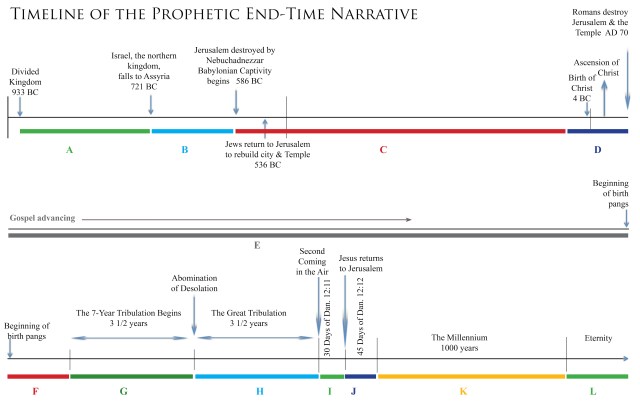
- Answer: I
When will the Lord fully fulfill this?
4“I will stretch out My hand against Judah, and against all the inhabitants of Jerusalem. I will cut off every trace of Baal from this place: the names of the idolatrous priests with the pagan priests—5Those who worship the host of heaven on the housetops; those who worship and swear oaths by the Lord but who also swear by Milcom; 6Those who have turned back from following the Lord, and have not sought the Lord nor inquired of Him.” (Zeph. 1:4-6)
- Answer: H
 ...and in his temple all cry, “Glory!”