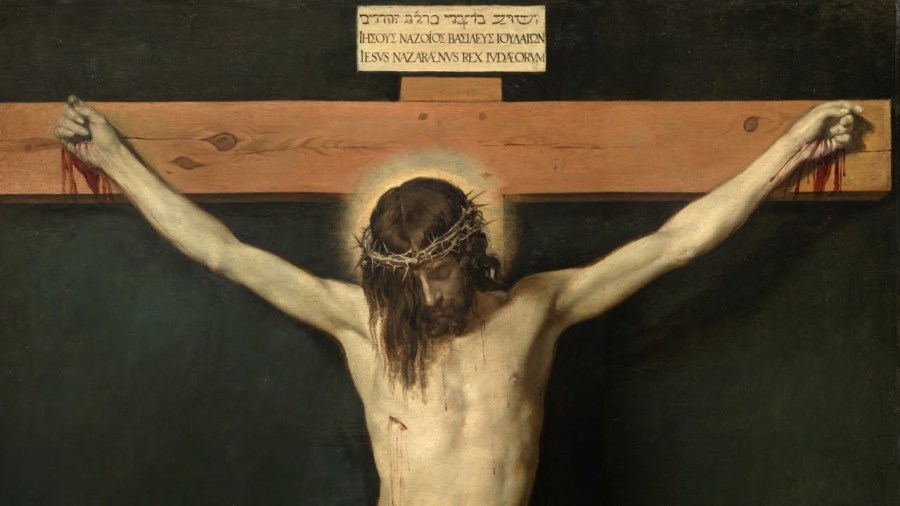
Introduction: The Problem of God
Apostle Paul writes to the Church of Rome that the existence and majesty of God is common knowledge among all people, and that these truths of God are, “manifest in them,” being displayed by creation (Rom 1).[1] In other words, God does not believe that atheists exist. At the most basic level, according to the Scriptures, all humans know that there is a God who is eternally powerful. Ever so naturally, creation also testifies that this God is a designer and an artist, who values beauty, balance, poetry, and order.
Growing up as an explorer and a bit of a rock climber, I have always found the order and beauty of nature to be a way to encounter God. I have, many times, felt like nature was a kind of mysterious and powerful father figure, even. It fascinates me that the tallest mountain in the world, Mount Everest, is just able to be climbed without the help of oxygen and that the cracks of mountains that run up El Capitan can be climbed with human hands. As though the earth was designed with humans in mind. It is said that beauty always leads to truth. Beauty also shows that the nature of truth is good. Theologian Romano Guardini writes in The Spirit of the Liturgy, that,
“Beauty is the full, clear and inevitable expression of the inner truth in the external manifestation. ‘Pulchritudo est splendor veritatis’—’est species boni,’ says ancient philosophy, ‘beauty is the splendid perfection which dwells in the revelation of essential truth and goodness.’”[2]
I have never been able to come to an understanding of how anyone is able to explain away God in the face of the cosmos. Disbelief in God baffles me, especially, as I know I am not smarter than atheists, or more gifted. I can only conclude that the present existence of so-called atheism is a mere indication, that all people must come up with some kind solution to the problem of God. Just as cruelty and evil is bizarre and cannot be explained simply, neither can the denial of God. Why would Satan even try to usurp God? It does not make sense. It is, as the Bible puts it, a mystery. The “mystery of lawlessness,” dwells in the heart of humanity, where, deep down inside, people are at enmity with God (2 Thess 2:7).
So, God is a problem that needs solving. As A.W Tozer put is in Knowledge of the Holy, “All the problems of heaven and earth, though they were to confront us together and at once, would be nothing compared with the overwhelming problem of God: That He is; what He is like; and what we as moral being must do about Him.”[3] Because no one can know for themselves, while living, what they will truly face after death, the way one chooses to deal with the problem of God and their existence, is essentially a matter of faith and trust. It is only in the face of death that one’s method of solving this problem of God is put to an ultimate test.
The Existence of God
Accepting that there is a God is the first hurdle one must face in solving the problem of God. In the rest of Romans, this acceptance is dynamically linked to thanking God and giving him glory for his creation (Rom 1). For me, this acceptance is very much linked to attributing the beauty and order of creation to an intelligent God. One of the most prominently believed theories, used to solve the problem of God, has been evolution. Interestingly, evolution, too, must deal with creation’s relationship, or lack thereof, to God. However, evolution came along at a time where humanity was ripe to throw off the problem of God. It began to be taught in schools just before the 70’s sexual revolution in America which would be followed by skyrocketing rates of divorce, fornication, homosexuality, and abortion. Such practices are clearly condemned by the Bible. The motives behind a collective consciousness to throw off the rules of God, seems both uncanny to me, and obvious. Furthermore, such hand-crafted solutions to the problem of God still fail to solve any problem at the foundational level. As stated earlier, even if one is convinced of evolution, he or she cannot truly know if it is altogether true until they die and find out. Believing in other means of how the earth was created or came to be, is ultimately a matter of faith, no matter what.
For me, any kind of creation account that is attributed to the universe or creation itself (rather than an intelligent higher power) does not add up in my reasoning. The Law of Entropy may show us that anything left in its natural state, alone, will eventually fall into disorder. On the other hand, believing that creation has no creator is equivalent to believing that 1000 different monkeys banging on typewriters have eventually been able to, all together, write out something infinitely greater and more complex, thoughtful, and beautiful than The Brothers Karamazov.[4] Not only is this random means of a masterpiece very improbable, but our very existence would be entirely nihilistic and meaningless without being created for any higher purpose. When talking to an atheist about the meaning of life in the face of an ultimate death, he disagreed with me. No, for the evolutionist, life is full of purpose. Only, that purpose is to enjoy life while you have it. I still find this to be a nihilistic mindset as old as time. As the Good Book mocks, “Let us eat and drink, for tomorrow we die! (Is 22:13)”
Yet, in the words of the Sermon on the Mount, “Is not life more than food and the body more than clothing (Matt 6:25)?” Even the whole of humanity (or at least, its greatest achievements and pursuits) seems to kick against such nihilistic thoughts. It reaches with all its strength towards greater truths, achievements, and pursuits, only just across the road of finding Christ and attaining sainthood enmasse. Humanity comes to understand how things work and they successfully pass on earthly wisdom from generation to generation. They have built fires, roads, tools, and buildings. They have built judicial systems, schools, libraries, and governments. They invented the telephone, the television, and the internet. As a whole, they have kept what they have learned from their first fathers and mothers and are going on to greater developments.
In general, I would argue that humanity does this because of their design and call to love. One cannot seek to preserve their family and impact the world around them without love. In the words of Mr. Rodgers, in speaking to a handicapped child, “That’s what learning is all about, isn’t it? A lot of it has to do with love.”[5] Humanity has been created to love, is trying to love, and is either failing or succeeding at loving.
The most probable conclusion, then, is that we are humans who are creative, conservative, ingenuitive, caring, and intelligent. That we, having an obvious beginning, did not make ourselves. That, we have a creator who has worked a miracle in designing us in his own image. That, our highest achievement is loving rightly.And, finally, if there is a God, whoever that God is, he must be love.
God is Love
The second hurdle one may face in solving the problem of God, is finding out who that God is. Love is the highest achievement mankind can accomplish. It may be concluded that all the evils of humanity come from hearts void of love. Even when one can be a great world power, or an inventor of some great medicine or scientific discovery, the love of money, comfort, and honor (or, even simply hatred and vengeance), can override the love of one’s fellow human and for God. Our powers and pursuits can so easily become weapons of mass destruction. The love for knowledge and advancement, here, becomes hateful and selfish. Thus, love must have an objective definition in order to be love. In my teen years I began to wonder if co-existence was the truest religion, where all religions lead to God.
Understanding that there was a God who had to be love, put this belief out of my mind soon after. I understood that love must have a singular, unified definition. For instance, a husband cannot love his wife unless he hates adultery. Love must hate evil and choose good in order to be love. It also did not make sense for there to be multiple versions of one God. It would be impossible to have so much order in creation with multiple deities who disagree with one another. I further concluded, that among all of the religions and beliefs I knew of, Christianity was the only one that rightly described a God of love. The Bible calls Christians to love even to the extent of loving one’s enemies. It calls us to love God, to love ourselves, and to love our neighbor. It challenges hateful and oppressive social structures and ideologies.
Further, where all the other religions demand their adherents to come and make themselves right before the gods, the God of the Bible comes down to humanity right where they are at, in the midst of their plight of sin and death. It is while we are in our sins that God loves us and gives us his Son (Rom 5:8). Moreover, the God of the agrees with the human spirit and the human experience. God is familiar to us, as a creator and as a Father.
God is Light
The disciple whom Jesus loved wrote, “. . . God is light and in Him is no darkness at all. (1 Jn 1:5)” If God is holy and cannot dwell with darkness, just as true light cannot dwell with a shadow, the question becomes: how can we humans who are dark dwell with a God who is light? Both our own consciences and the Ten Commandments, when truly thought through, can convict us of our depravity before a holy God. Unlike other religions which seek to weigh us in the end as we hope to turn out to be a good egg, the God of the Bible is not shy to tell us that we cannot earn or achieve righteousness. That, we are all dead in our trespasses and sins (Rom 3:10-18). That, we cannot be saved by good works (which are also filthy: Eph 2:8-9 and Is 64:6), which is a rather obvious conclusion.
Because God is pure light and holiness, and humanity is fallen, it takes a conformation to holiness in order to restore the relationship we once had with God in the Garden of Eden (Gen 2:25). This is another aspect of the weight of the problem of God. That we, as humans, are made in the image of God to reflect his image back to him, and we are not fulfilling our purpose. Though it was our own sins that separated us from a holy God, we remain unable to pull ourselves up to the holiness of God. In fact, our plight is so unsalvageable that it takes God himself coming down to take on flesh in order to work about a redemption for humanity.
Of course, this narrative adds up to there being a God who must be love. A God of love would intervene and save his creation. He would disclose himself and make himself known, that we may relate to him rightly. In Christianity, we find a God who does just that. He gives us both the Word (which he upholds above his name in Psalm 138:2), and his Son to bridge the gap between us, caused by sin. Although I would presume that 1,000 monkeys banging on typewriters cannot create War and Peace (by the way, where would they get the energy and resources to do so?), somehow, one solid narrative of God’s redemptive acts through Israel and his Messiah was recorded in a single message called the Bible. It is a story written over 1,500 years on three continents with forty different authors in sixty-six different books that contain historical, geographical, and firsthand eyewitness accounts.[6]
Further, we find in Jesus, a God who takes on the nature of his own creation, in order to pave a way of redemption and break the curses of sin and death. By walking out the obedience that we did not and cannot walk out, and by paying the penalty for our sins, humans may be redeemed and called righteous by trusting in the divine and supernatural work that God has provided in the cross and resurrection. The cross and resurrection solve this ultimate problem of God: our depravity and our doom of separation from God. Tozer writes of our obligation to holiness:
“That mighty burden is his obligation to God . . . And when the man’s laboring conscience tells him that he has done none of these things, but has from childhood been guilty of foul revolt against the Majesty in the heavens, the inner pressure of self-accusation may become too heavy to bear. The gospel can lift this destroying burden from the mind, give beauty for ashes, and the garment of praise for the spirit of heaviness. But unless the weight of the burden is felt the gospel can mean nothing to the man; and until he sees a vision of God high and lifted up, there will be no woe and no burden. Low views of God destroy the gospel for all who hold them.”[7]
Sin, here, is neither thrown away and forgotten by sheer force of will, nor is it ignored and glossed over. The love of God demands true justice and holiness. Yet, the love of God here, in the cross of Christ, has God both demanding, executing, and paying for the justice he demands in us. [8] In the end, the cross and resurrection of Christ are God’s ultimate solution to the sin and fall of man so that they may be restored to a right relationship with God. Holiness is made possible by the imputed righteousness of Christ and our conformity to his likeness by the work of the Sprit from the inside out.
Yet, this righteousness given to us is said to be a “free gift” that must be received (Rom 5:17). In this, there is a balance in which our free wills are respected by God. At the same time, just as in our real, temporal lives, our choices will have eternal consequences. In a word, we cannot do God’s part and God refuses to do our part. He has lifted all of the heavy weights for us, yet we are required to participate with our free wills by surrendering to the Lordship of Christ and trusting in his salvation work.
The Mystery of the Church
When Israel was in bondage in Egypt, they were surrounded by those who believed that they were the best of the nations, because their leaders talking with the gods. What kind of advancements must the Israelites thought they would come to have now that their leader, Moses, was talking to the God of all gods? They would have the best food, the best wine, the best land, the best houses, the most riches, and the best advancements of any other nation, of course. Yet, God, instead, has a different priority as he marches Israel straight away to Mount Sinai. There, he reveals his intentions as he makes covenant with Israel and gives them the Ten Commandments. The Bible refers to this meeting as a marriage covenant that God made with his people (Jer 2:2; Hos 2:19-20).
Christians deceive themselves to believe that following Christ must result in utter prosperity and blessing in this life. Although blessing, prosperity, and advancement are gifts of God, it is not the true reason for our salvation or faith in God. Salvation was needed because of humanity’s separation from God. Separation from God results in death and much suffering. And so, salvation, is ultimately a unification with God, first and foremost. Yes, blessing will follow, but it is not the chief reason for salvation, and blessing outside of unity with God is not real.
Though the Israelite’s trip was to the Promised Land flowing with milk and honey, a journey of days turned into forty years. Here, God tested his people and formed in them a foundation for his redemptive story to play out upon. To put it simply, God’s chief concern with us is that we would become saints.
In the words of Leon Bloy, “The only real sadness, the only real failure, the only great tragedy in life, is not to become a saint.”[9] Being reunited with God in a way in which one is able to love God rightly and receive the love of God, is the highest achievement, treasure, and success in this life. Humanity has been created in the image of God (who is love) so that they may also love. All of humanity’s achievements outside of love turn out to be hateful. To conclude, love is the highest achievement and goal of Christianity. This love is both beautiful and truthful. It has definition. Yet, it’s final goal is unbroken relationship and communion with God.
Having people who voluntarily choose love over hate is arguably the best reason why God put the tree of the knowledge of good and evil in the garden. Here, humans were given a free will that God has not, since, violated. This free will allows humans the capability to choose God, who is love, or to reject him and to choose hate. This was, perhaps, the first planting of the Church. In God’s divine wisdom, he knew that it can only be among the tares that the wheat may grow. Or, in more blatant terms, it comes at the cost of a lot of rejection to himself and people going to hell, along with a lot of crimes and misfortunes, for the Church to become a reality and to grow into the full stature of Christ (Eph 4). Not only this, but the perfection of saints comes about through the long journey to the Promised Land. It comes about through sanctification, which involves trials and suffering. This seems like a great amount of effort and suffering, all for the affections of the Church. Yet, it is likely the only means in which a created being may be able to love at all.
Thus, it is through giving humanity free will that humanity may become a creation that is able to love. In this, they have also become a creation that is able to hate. Love is a term that is often taken for granted; it can be a cliché word or a word used for food. On the other hand, love may in fact be a very unique attribute of humans and God alone. Of course, the need to define what this unique love remains to be explored, but, in a word, it is the ability to give up one’s life for another and it is perhaps best symbolized by marriage which is a shadow of the love of Christ for the Church, put on display in the cross (Jn 15:13; Eph 5:21-32). It is an ability to have unbroken communion in harmony, understanding, knowing, and being known yet while being two or more separate persons. For instance, the nature of any relationship between two people depends upon an unknowing of the other. Revelation of the self to another must be disclosed by an act of one’s free will.
If the Church is called to be the Bride of Christ, then God is looking for an equal partner in humanity where he may share his heart and have our own. Bob Sorge, in his book The Fire of God’s Love, explains how the cross and the call for Christians to come and die with Christ is primarily an invitation to grow in love and unity with God. The love through death that Christ invites us to, and the rewards of trusting in him in this, are, in fact, greater than our temporal comforts, honors, and riches. Bob Sorge writes,
“Jesus calls us to cast aside all worldly interest and to take up our cross and follow Him because in His infinite love He knows the benefits that await those who do so. You’ve got to see it as a love appeal. To accept His call to the cross is to embark upon an eternal love adventure with the God of the universe.”[10]
He goes on to describe how God is looking for a partner to share his power as well as his suffering with. It is through understanding the cross that a Christian may be anointed to love and minister to others who are also in pain and bring them into fellowship with. He is not looking for a co-dependent bride that shies away at the scars of Christ. The Father, likewise, has made us in his own image and is looking to find the image of his Son in us. Thus, we are invited to share in the suffering and the joy (and the mission) of Christ. We are invited and baptized into his death and resurrection alike, that we may learn to love.
In conclusion, the Christian hope and faith are not unto miracles, signs, and wonders or an easier life. Miracles, signs, and wonders testify of the truth of the gospel and of an ultimate Christian hope of salvation. This salvation is ultimately an unbroken communion and unity with Christ with an everlasting growing in the love of God. Here, it is not God who grows in love, for he is unchanging, and will always be love. On the other hand, though we may truly know God rightly, we will never finish knowing God because he is everlasting and transcendent. It is us who will continue to be filled with the love and knowledge of God for eternity.
Conclusion: Our Journey into Trinitarian Love
It is often discussed among theologians, why God created humanity. The conclusion seems to always be love. That, God, being love, out of the overflow of love for himself between the three persons of the Trinity, created humans to receive and give love back to one another and to himself. This all sounds flowery and is easy to scoff at. Yet, love is powerful and consequential. A lack of the love of God can very well be the driving force behind all of the crime and evils of this present world.In this, the human emotions, desires, and goals have gone awry. The love of God can set such passions in order. It can set the world in order. It can set our hearts and minds in order. It can set families and schools and churches in order.
Love is a never-changing attribute of who God is. It is not something that God does sometimes. God does not need the love of humanity, as he is self-sufficient. On the other hand, he desires to fellowship and to have friendship, partnership, and unity with humanity. He has gone through the greatest costs to have it, as well. I would argue that it surprises and fascinates God to see a creation with free will, choosing to love him. Where all have an equal opportunity to choose God, it is only the Church who does. This is a mystery. It is a love that overwhelms the heart of God (Song 6:9-10).
Man’s projects are high and lofty. They have to do with money, impressive buildings, and new inventions. These will last for some time but will ultimately be destroyed or replaced with a new invention. Some of these inventions will end up causing much harm. But, God’s projects, are eternal projects. God’s projects are people. He works to bring depraved human souls to be able to love and be loved for eternity.
Even among Christians, the pursuit of the love of God often takes the back burner. The greatest litmus test may be how much someone prays. The greatest means of relating to anyone we know and love is how much we share with them or talk with them. Likewise, prayer, or talking and hearing from God, is the chief means of interacting with God. It is how God may disclose himself to us, and how we may disclose ourselves to him.
It is no wonder that the church of Ephesus thought that they had things going great. They were doing great works of charity and ministry in the name of God. They were teaching right doctrine and were able to discern the lies and false prophets. They hated evil and loved God’s truth. Yet, their ministry proved to be an unacceptable replacement for the love of God. Because of this, God threatened to take away their lampstands unless they repent (Rev 2). Likewise, many will say to the Lord, in that day, all the things they have done in his name, only to be told he never knew them (Matt 7:21-23). We find then, that works in the name of Christ, or for Christ, do not equate to a relationship with God. Ministry and other things we do in the name of love, are not the substance of our love for God. They ought to be the fruit of our love, though they often come before it, like a cart before a horse. We suffer from the age-old problem of self-righteousness, trying to be like God in our own strength, instead of doing all things out of an overflow of relationship with God.
Our love for God must be aligned by the hours, by the days, by the weeks, and by the seasons. We so easily stray from the First Commandment to love God first with all that we are. In this, I find that lukewarm hearts tend to believe that God is also lukewarm. We grow tired of him because we think he has grown tired of us. But God is not altogether like us (Ps 50:21). The solution to a lukewarm heart is to be taken up into the Trinity. When we look at the Trinity, which we have been taken up into communion with through Christ, we find a God who is never jaded or bored. He does not grow frustrated or tired. His eyes are always like flames of fire. It is impossible for him to not be present with us. It is impossible for him to run out of fervent love. It is us that must be conformed to him in receiving this love.
Finally, the achievement of this love is a promise Christ has given to the Church. For, Christ’s prayers will not go unanswered. In his high priestly prayer in John 17, Jesus asks the Father to impart a love to the Church that is as powerful as the love that the Father has for the Son. This is what becoming a saint is all about. Should we ever forget, we may look at the lives of the saints, who are not remembered for their great accomplishments, inventions, or works. They are noted for one thing: their radical receiving of the love of God. This is the one thing that Jesus calls necessary in this life (Lk 10:42). In the midst of a world which cannot discern the poured-out love of God, these ones have made it their life’s pursuit and treasure.
BIBLIOGRAPHY
Books
Erickson, Millard J. Christian Theology. 3rd ed. (Grand Rapids, MI: Baker Academic, 2013).
Guardini, Romano. The Spirit of the Liturgy, translated by Ada Lane (London: Sheed & Ward, 1937).
Sorge, Bob. The Fire of God’s Love. (Kansas City, MO: Oasis House, 1996).
Tozer, A.W. Knowledge of the Holy. (New York, NY: Harper & Row, 1961).
Other Sources
East, Brad. About that Famous Leon Bloy Quote. 28 August 2024. Bradeast.org. https://www.bradeast.org/blog/famous-lon-bloy-quote (5 May, 2024).
Etheredge, Craig. Is the Bible Reliable. 24 August 2023. Disciplefirst.com. https://disciplefirst.com/is-the-bible-reliable (5 May 2024).
Rogers, Fred. Something Worth Giving: Reflections from Our Favorite Neighbor. (Houston, TX: GCYF, 2002). https://static1.squarespace.com/static/54b69d33e4b0f32f824c9491/t/58d55ad35016e14423ecab10/1490377494338/SomethingWorthGiving.pdf (5 May 2024).
Sack, Hearld. Emile Borel and the Infinite Monkey Problem. 7 January 2023. Scihi.com. http://scihi.org/emile-borel-infinite-monkey-problem/ (5 May 2024).
[1]Unless otherwise indicated all Bible references in this paper are to the New King James Version (NKJV) (Nashville: Thomas Nelson, 1982).
[2]Romano Guardini, The Spirit of the Liturgy, translated by Ada Lane (London: Sheed & Ward, 1937), 114–115.
[3] A.W. Tozer, Knowledge of the Holy, (New York, NY: Harper & Row, 1961), 10.
[4] Harald Sack, Emile Borel and the Infinite Monkey Problem, 7 January 2023, Scihi.com, http://scihi.org/emile-borel-infinite-monkey-problem/ (5 May 2024).
[5] Fred Rogers, Something Worth Giving: Reflections from Our Favorite Neighbor, (Houston, TX: GCYF, 2002), https://static1.squarespace.com/static/54b69d33e4b0f32f824c9491/t/58d55ad35016e14423ecab10/1490377494338/SomethingWorthGiving.pdf, 12, (5 May 2024).
[6] Craig Etheredge, Is the Bible Reliable, 24 August 2023, Disciplefirst.com, https://disciplefirst.com/is-the-bible-reliable, (5 May 2024).
[7] Tozer, 11.
[8] Millard J. Erickson, Christian Theology, 3rd ed. (Grand Rapids, MI: Baker Academic, 2013), 731-752.
[9]Brad East, About that Famous Leon Bloy Quote, 28 August 2024, Bradeast.org, https://www.bradeast.org/blog/famous-lon-bloy-quote (5 May, 2024).
[10] Bob Sorge, The Fire of God’s Love, (Kansas City, MO: Oasis House, 1996), 1-30.
 ...and in his temple all cry, “Glory!”