Joelle Yanko October 27, 2026
The Miracles of Elisha: The Healing of Jericho’s Waters in 2 Kings 2:19-22
Consecrated By Salt
- The Context of 2 Kings 2:19-22
- Elisha’s healing of the waters takes place shortly after King Ahab dies around 850 BC.
- Elijah is about to ascend in 2 Kings 2. He is driven further and further east from Gilgal to Bethel to Jericho to the Jordan River. Notice, how like Moses Elijah died outside of the Promised Land. Each time Elijah tells Elisha to stay behind Elisha refuses (similarities between Peter, feed my sheep and Naomi and Ruth – entering into his calling). Before Elijah goes up he asks Elisha what he would like and Elisha asks for a double portion of Elijah’s spirit.
- Elijah’s last miracle is Elisha’s first – the splitting of the Jordan in verse 15 (it was previously split when Joshua crossed) and the sons of the prophets witness this and recognize that Elijah’s ministry is continuing through Elisha. Elisha would go on to perform double the miraces.
- Elisha’s first public miracle is the healing of the waters of Jericho in 2 Kings 2:19-22.
- Jericho is well known for when Joshua conquered the city and the wall came tumbling down around 1400 BC. Moving back to Joshua 6:26 (right after the wall came down and Jericho was conquered), we see that he left the land “cursed” or in Hebrew “Herem”. He cursed any rebuilding of Jericho:
“Then Joshua charged them at that time, saying, “Cursed be the man before the Lord who rises up and builds this city Jericho; he shall lay its foundation with his firstborn, and with his youngest he shall set up its gates.” - About 450 years after Joshua’s curse brings us to 1 Kings 16:34 where Hiel of Bethel under the reign of Ahab rebuilds Jericho despite this curse at the cost of both his first and last born sons:
“In his days Hiel of Bethel built Jericho. He laid its foundation with Abiram his firstborn, and with his youngest son Segub he set up its gates, according to the word of the Lord, which He had spoken through Joshua the son of Nun.”
- The narrative of 1 Kings shifts here with Elijah coming on the scene to defeat the Baal’s and reveal the judgments of God.
- Whereas in ancient Israel the King and the High Priest were supposed to guide the people (and prophets were more rare when they did well), by this time that system had completely broken down. In fact first kings is essentially a story of broken kings and broken kingdoms and 2 kings has to do with God’s kingdom coming down and being established. The political and spiritual system failed and so God raises up his prophets and begins to directly confront the monarchy head on. Thus, Elijah comes on the scene in 1 Kings 17.
- So immediately, as it were, the prophets move into Jericho after the rich build the city… 2 Kings 2:5:
“Now the sons of the prophets who were at Jericho . . . “ - Due to overlapping timelines (Jericho is rebuilt during King Ahab’s reign (1 Kings 16:34 and by the start of 2 Kings 2 Elijah ascends after Ahab as well as his successor Ahaziah died in 1 Kings 22:40; 2 Kings 1:17) So, the sons of the prophets living in Jericho took up residence between a minimum of 2 to a maximum of 20 years from Jericho’s reconstruction (King Ahab’s total reign was 22 years and Ahaziah had a brief 2 year reign). We don’t know how many years it took and whether the prophets inhabited Jericho towards the beginning or end nonetheless, the transition from a cursed abandoned city to a prophetic community happens in a short span. It is believed the city was abandoned because some believe the first and last child’s death indicate that all of his children died and that his family was wiped out from that area but its possible that there were other citizens.
- It is in the same way that God takes from the rich and gives to the poor (1 Samuel 2:7–8; Luke 1:52–53; Matthew 5:5; Luke 6:20:)
- Jericho is well known for when Joshua conquered the city and the wall came tumbling down around 1400 BC. Moving back to Joshua 6:26 (right after the wall came down and Jericho was conquered), we see that he left the land “cursed” or in Hebrew “Herem”. He cursed any rebuilding of Jericho:
- Elisha’s healing of the waters takes place shortly after King Ahab dies around 850 BC.
- The Problem 2 Kings 2:19:
“Then the men of the city said to Elisha, “Please notice, the situation of this city is pleasant, as my lord sees; but the water is bad, and the ground barren.”
- Derek Prince identifies various ways a curse begins and various evidences of a curse. Among these are authority figures speaking a curse or disobedience to what God spoke. One fruit of a curse he says is barrenness.
- A curse is like a vehicle of supernatural spiritual power that travels through time like a dark shadow or evil hand from the past that doesn’t go away. Curses are like blessings in the sense that when they are spoken they don’t go away. And so the remedy of a curse, to Derek Prince, requires a legal revocation where there is repentance, recognizing the legal grounds, and claiming Galatians 3:13 “Christ redeemed us from the curse” to break it. A legally binding spiritual exchange with the cross of Christ. 4 R’s Recognize, Repent, Renounce, Rebuke, Replace, Resist. Forgive everyone completely, renounce, destroy objects.
- In any case, the sons of the prophets dwelling at Jericho have a problem – the waters is bad and the land is barren even though Jericho is a pleasant place to live with prospect.
- This isn’t to be confused with the Jordan River. This is a mostly freshwater spring located in Jericho now called today, Elisha’s Spring.
- The Jordan River which is about five miles East of Jericho and a 10 mile round trip for water would be devastatingly hot through the desert. They likely were boiling the water or depending on rain water. So this was mostly a freshwater spring located in Jericho which is today called Elisha’s Spring.
- What does it mean for the water to be bad? People have studied this and it’s connection to the land’s barrenness. They muse that it may have been parasitic and had extreme mineral poisoning. If this is the case, the Billharzia parasite would cause severe sickness and high rates of miscarriage and the minerals would be toxic to the local vegetation causing the fruit to drop early or kill the livestock. While salt could help kill some parasites at the source, it wouldn’t have helped the mineral issue and in any case, it was a miracle.
- This isn’t to be confused with the Jordan River. This is a mostly freshwater spring located in Jericho now called today, Elisha’s Spring.
- The Human Solution:
- We don’t know why they didn’t ask Elijah to heal the waters or what they thought of it.
- Perhaps, like most people, they dealt with the curse or kept putting off getting to the “source” or root of the problem which was spiritual. “Look, it’s not so bad! We just have to focus on collecting rain – forget about that spring of water.”
- Perhaps they ignored the spiritual truths as to why the water was cursed and attributed it to nature and didn’t believe there was a solution.
- Perhaps they were continuing to throw every solution at the problem in ignorance
- Perhaps it may be because Elijah’s ministry was mostly focused on judgment whereas Elisha’s ministry was focused on salvation or redemption. Notice Elijah’s name means El is Jehova and Elisha’s name means El is Salvation.
- In any case, perhaps Elisha’s ministry was seen as a second chance for them as it is the first thing they go to Elisha for. Think why is this the first thing they run to Elisha with? I imagine when Elisha went up they were like you know we really should have asked him to fix this water issue.. We are at a breaking point here… and now Elisha seems to be a second chance at it.
- Often human nature waits until it’s too late to bring a curse in our lives to God. We wait for a relationship to crumble, or what have you. God still gives us a second chance right there.
- Often human nature waits until it’s too late to bring a curse in our lives to God. We wait for a relationship to crumble, or what have you. God still gives us a second chance right there.
- We don’t know why they didn’t ask Elijah to heal the waters or what they thought of it.
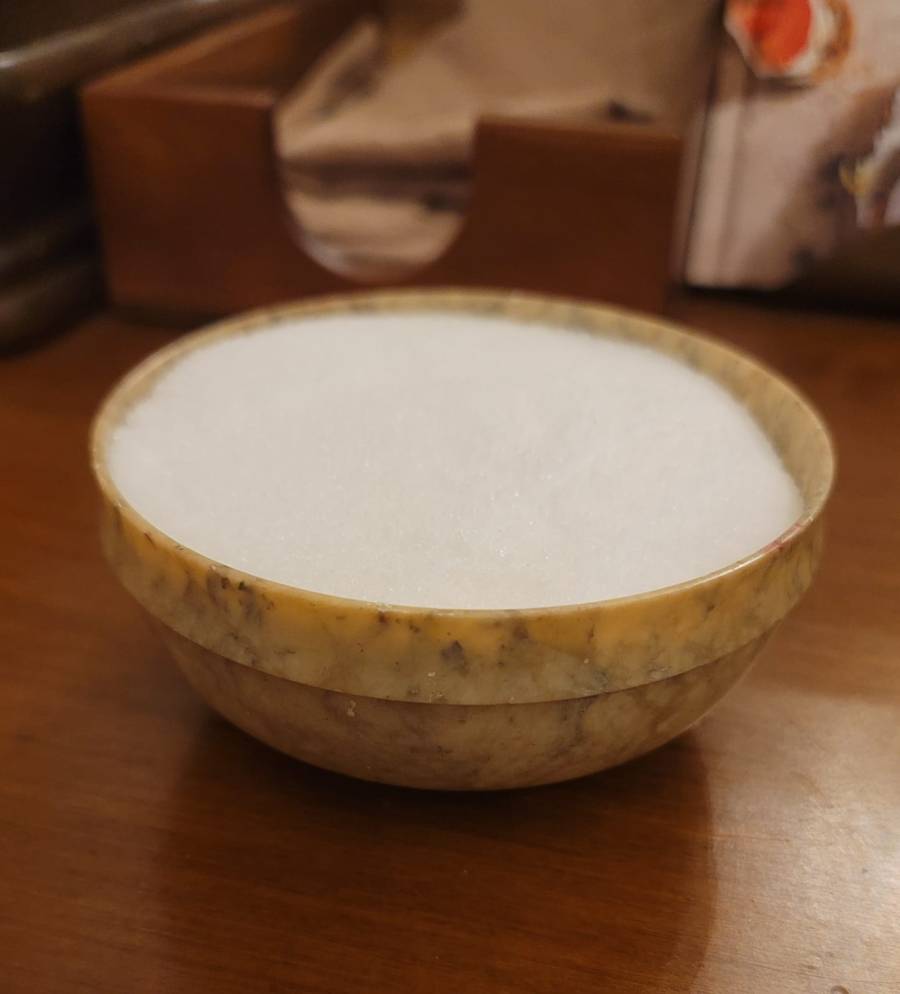
- God’s Solution: The new bowl filled with salt
- Why a new pot? This is clearly pointing to a temple ceremony. Scientifically, clay is porous and can hold microscopic contaminants. But also if you see Leviticus 11:33; 15:12; 6:28 clay pots in terms of offerings were to be new or thrown out after used.
- Moreover the mandate for salt is found in Leviticus 2:13 The Covenant of Salt which had to do with first fruits and all holy offerings. The covenant of salt represented God’s unbreakable and pure covenant and was offered with ALL offerings. It represented a binding agreement between individuals. See Num 18:19 Lev 2:13 2 Ch 13:5.
- What does God take away from those who rebuilt Jericho? The firstborn and the last born – firstfruits and fruitfulness. Some understand this to mean all his children died from the first to the last.
- Jericho was the “firstfruits of the promised land” so to speak. It was the first city the Israelites conquered when they crossed the Jordan River into Canaan the Promised Land.
- Jericho wouldn’t fall under a standard firstfruit offering to be given to a priest and so it fell under “herem” the devoted things to be destroyed, put on the altar of fire. Joshua explicitly uses the word Herem in his curse of Jericho four times in Joshua 6:18:
“And you, by all means abstain from the accursed things, lest you become accursed when you take of the accursed things, and make the camp of Israel a curse, and trouble it.” - It is the same word used for devotion five times in Leviticus 27:28-29:
“‘Nevertheless no devoted offering that a man may devote to the Lord of all that he has, both man and beast, or the field of his possession, shall be sold or redeemed; every devoted offering is most holy to the Lord. 29 No person under the ban, who may become doomed to destruction among men, shall be redeemed, but shall surely be put to death.”
- Jericho wouldn’t fall under a standard firstfruit offering to be given to a priest and so it fell under “herem” the devoted things to be destroyed, put on the altar of fire. Joshua explicitly uses the word Herem in his curse of Jericho four times in Joshua 6:18:
- For the land, Herem was used for first fruits and for humans doomed to destruction, this was a type of capital punishment. The positive side of consecration had to do with consecrating something as holy to God while the negative had to do with the removal of evil. It may also have to do with the extreme wickedness of Jericho in which only Rahab the Harlot was saved.
- While Jericho for Ahab would have provided a means for Baal expansion, God put the prophets there in place like putting his army in an enemy’s fortress.
- Just as Jesus fulfilled the Sabbath by working his miracles on the Sabbath and bringing people into the true rest of God, the prophets by occupying Jericho restored to God the firstfruits of Jericho.
- It was therefore expedient to give an offering of salt, as it were, or to invoke the Salt of The Covenant at the waterheads to give to God the firstfruits of Jericho and The Promised Land. For instance, the water was what would give the land its harvest and fruitfulness which was now “barren”.
- The salt is thrown into the source.
- Leviticus 2:11 honey and leaven were banned from the altar but salt was essential. Salt can be seen as the exact opposite of leaven or honey. Leaven and honey feed but salt is an astringent and freezes corruption. Moreover, salt is purity. It is extremely stable. If you mix salt with water it will mix well but if you dehydrate that same glass the salt will remain just as before and is not subject to breaking down as sugar does under heat.
- Elisha breaks the curse on the water, essentially, by reconsecrating it to God as a firstfruit
- New Testament Application
- In the Sermon on the Mount in Matthew 5:13 Jesus says that we are the salt of the earth:
““You are the salt of the earth; but if the salt loses its flavor, how shall it be seasoned? It is then good for nothing but to be thrown out and trampled underfoot by men.” - Areas of curse in our life may be eradicated by consecrating them to God. We are the ones “the men of the city” who are the only ones who are able to seek God by recognizing the curse and bringing it to Him for healing.
- The new bowl may be seen as the new covenant or the new creation that we become in Christ. He cannot put new wine in our old wineskins, by rebirth in His Spirit we may become a new wine skin to hold His Spirit. This is also known as regeneration or the baptism of the Spirit.
- The Bible also commands our speech to be salty in Colossians 4:6:
“Let your speech always be with grace, seasoned with salt, that you may know how you ought to answer each one.” - But speech is the fruit of our heart, and so the heart is the source that must be treated. Matthew 12:34:
“”Brood of vipers! How can you, being evil, speak good things? For out of the abundance of the heart the mouth speaks.”” - When we treat our source John 7:38:
“ He who believes in Me, as the Scripture has said, out of his heart will flow rivers of living water.”” - We don’t wrestle against flesh and blood but principalities, etc. and so in the same way, we have to be salt in the spirit. Don’t look at the muck flowing down the river or the low hanging rotten fruit, this results in warring in the flesh. Go to the source, the heart. This isn’t behavior modifying its heart regeneration by devoting consecrating giving back our firstfruits of our whole selves to God. First Commandment lifestyle – that is the firstfruits of our life to love God with all the heart, mind, soul, and strength. Apply the astringent of God’s truth, purity, and Word into the heart. I think of confession, conviction, and consecration. Calling sin what it is, repenting, getting rid of the rot, 4 R’s – repent, renounce, rebuke, replace.
- In the Sermon on the Mount in Matthew 5:13 Jesus says that we are the salt of the earth:

